Day 33 (5th September) – Thusis to Andermatt.
Today we rode north down the Hinterrhein (Posterior Rhine), turned sharply west by southwest, and rode up the Vorderrhein (Anterior Rhine) to Oberalp Pass, our main climb of the day.
En route, we passed the entrance to the Ruinaulta (Rhine Gorge), formed by the largest visible rock slide in the Alps, when 10,000 years ago, 100 billion m³ of rock thundered into the valley.

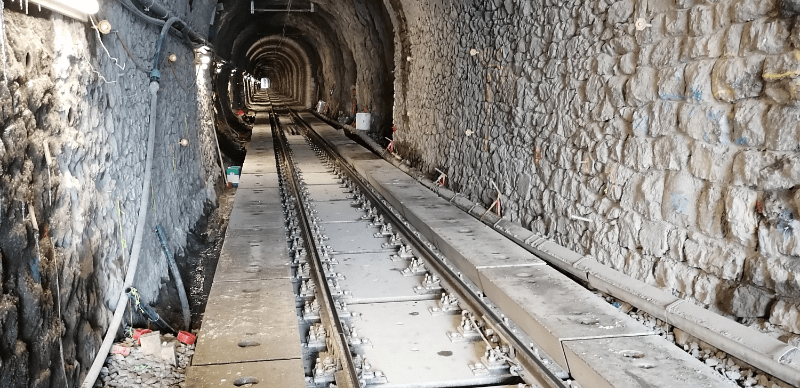
We could see a train far below snaking its way up the valley. As well as the river carving its way through the pile over time, the Swiss carved a railway line 100 years ago through the gorge via numerous tunnels and bridges (you get the sense there’s going to be lots of zeros in this story…).
High above the river, we stopped off in the town square of Valendas and ‘discovered’ the largest wooden fountain in Europe (40 m2 in area, holding 15,000L of water). At the head of the fountain is a wooden mermaid sculpture, a reference to the long-traveled merchants from Valendas in the past.
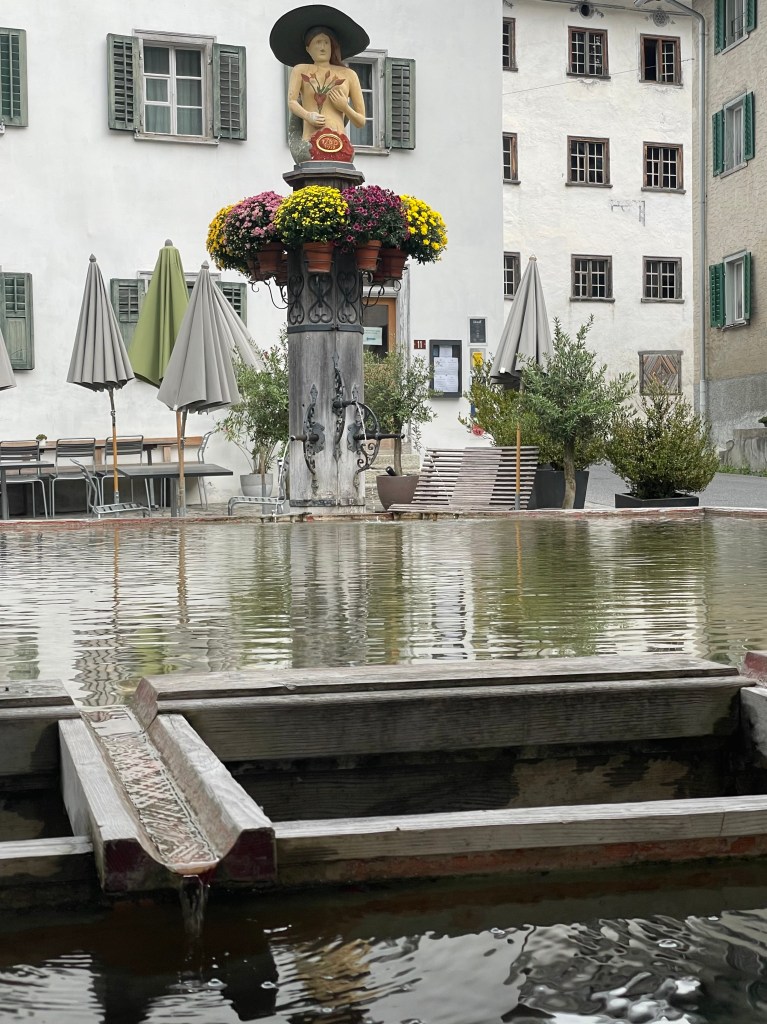
At least 260 years old, today it is a nationally protected village square. Until the beginning of the 20th century, this fountain was the only source of water for the entire village. As such, besides providing drinking water for villagers and their livestock, it served as the local laundry, children’s play area and, as the central water source, an important social meeting point for villagers.
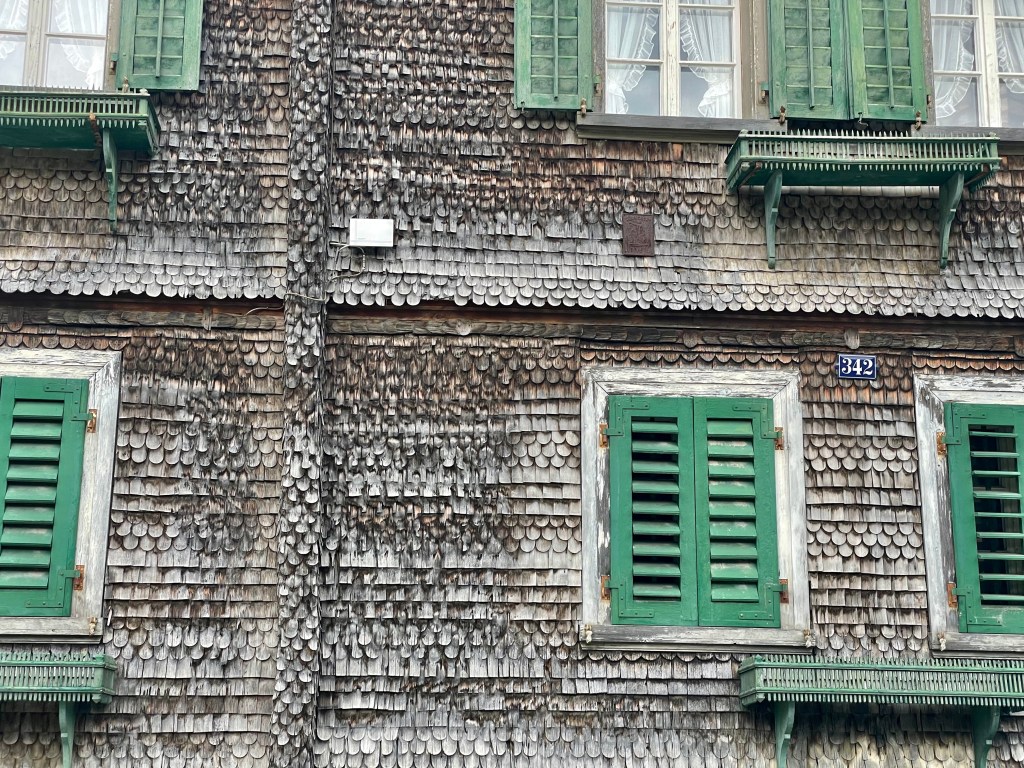
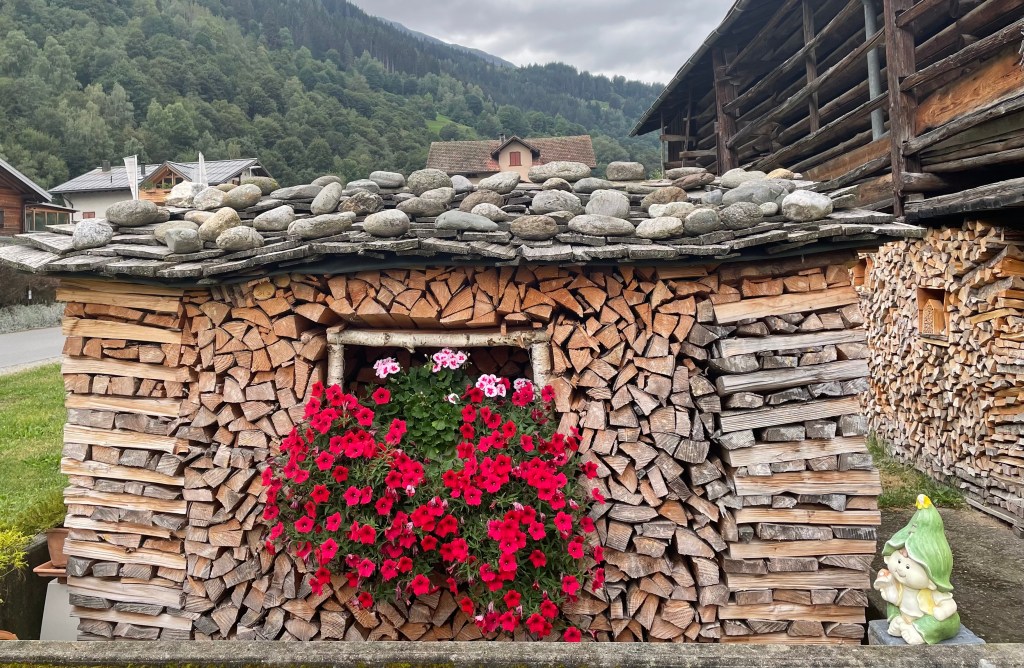
One of the most distinctive sights throughout our Alps journey has been the prolific use of timber. From the beautiful to the banal, from cedar tiles to artistic wood stacks, timber craftsmanship and woodwork is evident everywhere.
For lunch we caught up with Sue and Liz in Disentis/Mustér and stumbled upon the Alte Bündnerstube Stiva Grischuna, a traditional Swiss restaurant.
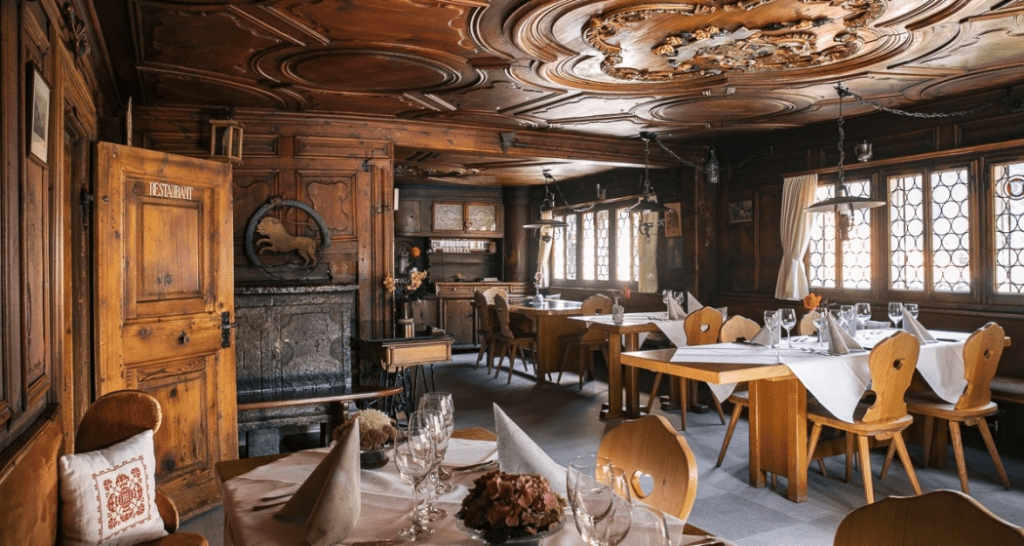
The restaurant, originally known as the “Zum Löwen” (The Lion), has a rich history dating back over 200 years and is one of the oldest surviving guesthouses in Disentis/Mustér. It was built in the Bauernrokoko (peasant rococo) style by Fidel Condrau after the “Franzosenbrand” (French fire) of 1799, which had destroyed much of the village.
Among its very fine features is a beautifully paneled ceiling from 1804-1805 displaying the coats of arms of old Romansh families and a soapstone stove dated 1801.
The food was exceptional too…
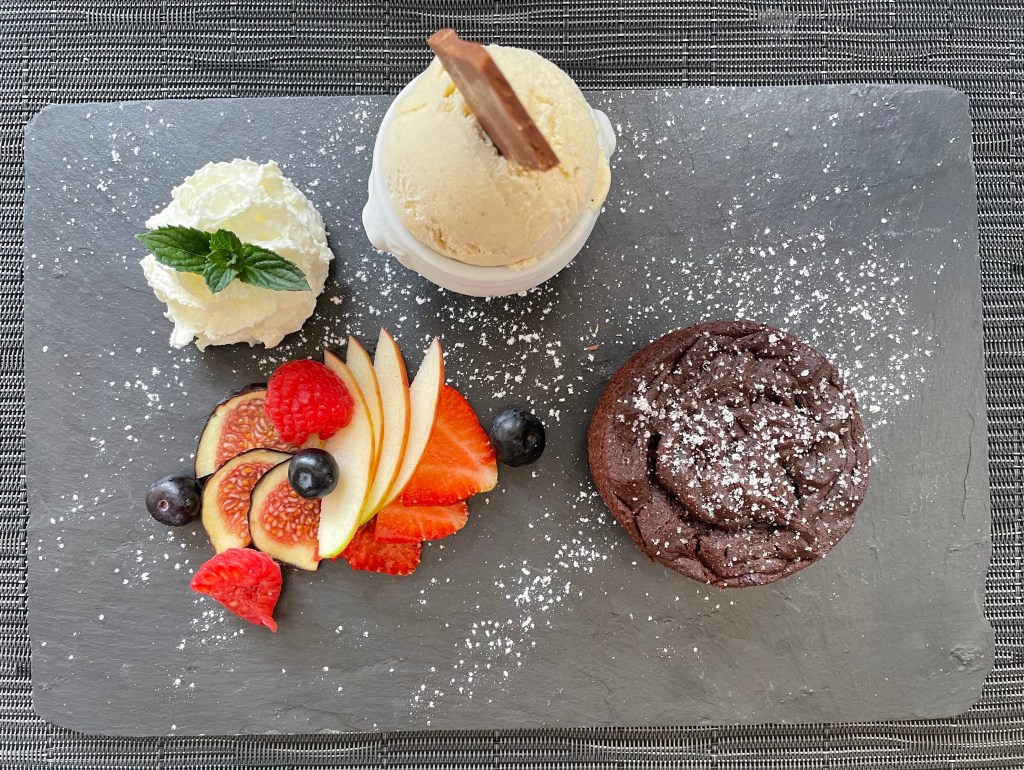
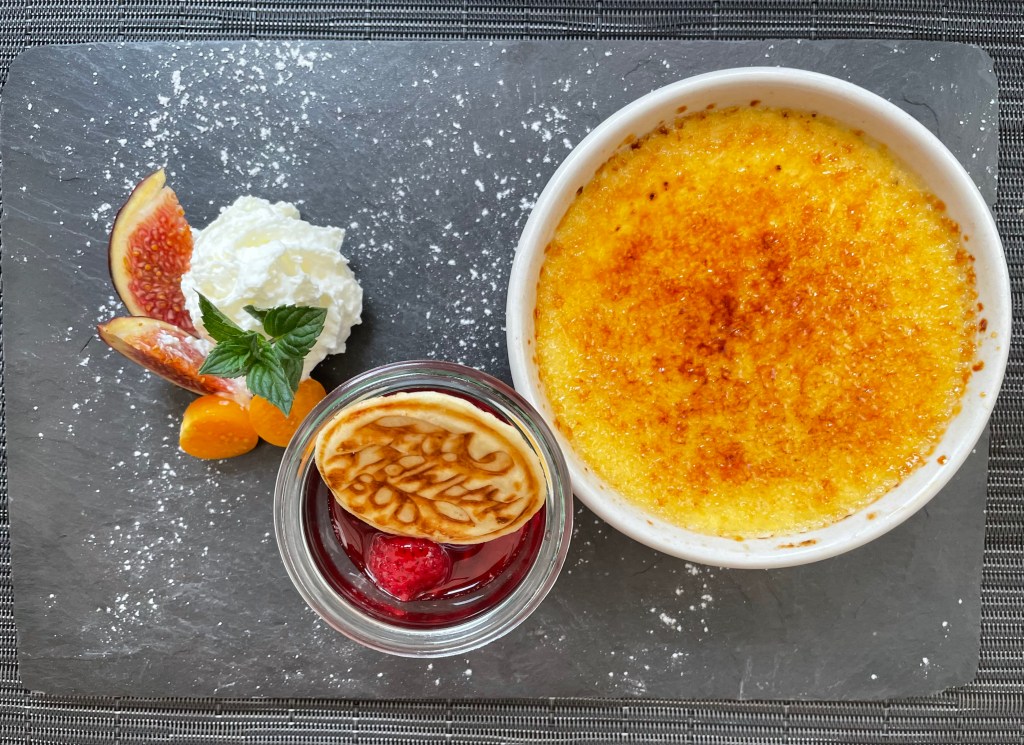
After lunch, and with satiated tummies, it was back on the bike to tackle the long climb to Oberalp Pass.
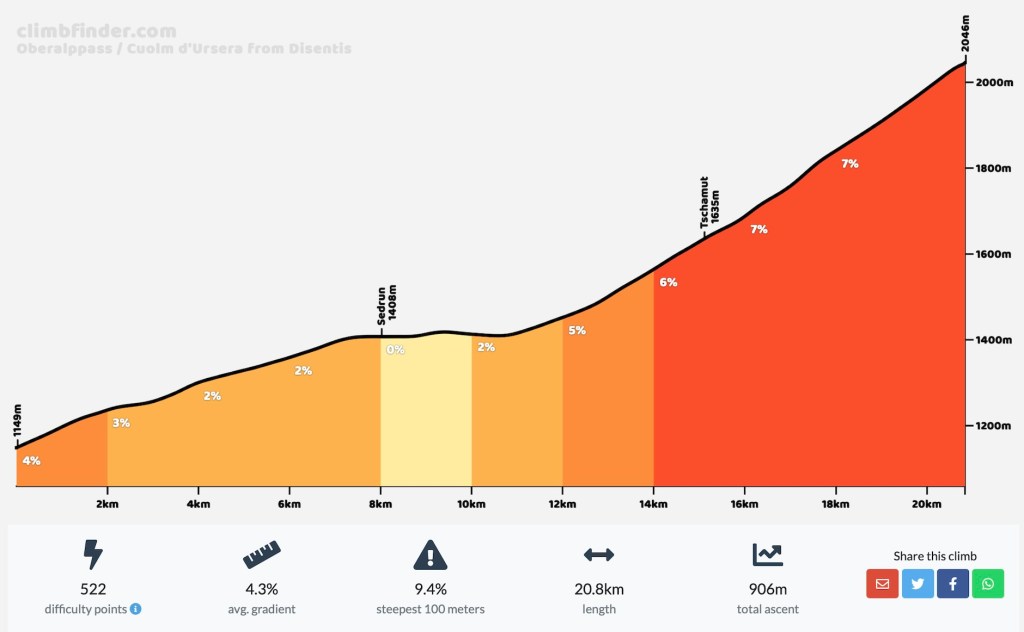
We didn’t get far before the rain started. Slow going on heavy stomachs, the rain only got steadier. By the pass, we were drenched. We took shelter to refuel, dry off a bit and put on extra clothing for the descent.
At the pass we also came across a lighthouse!
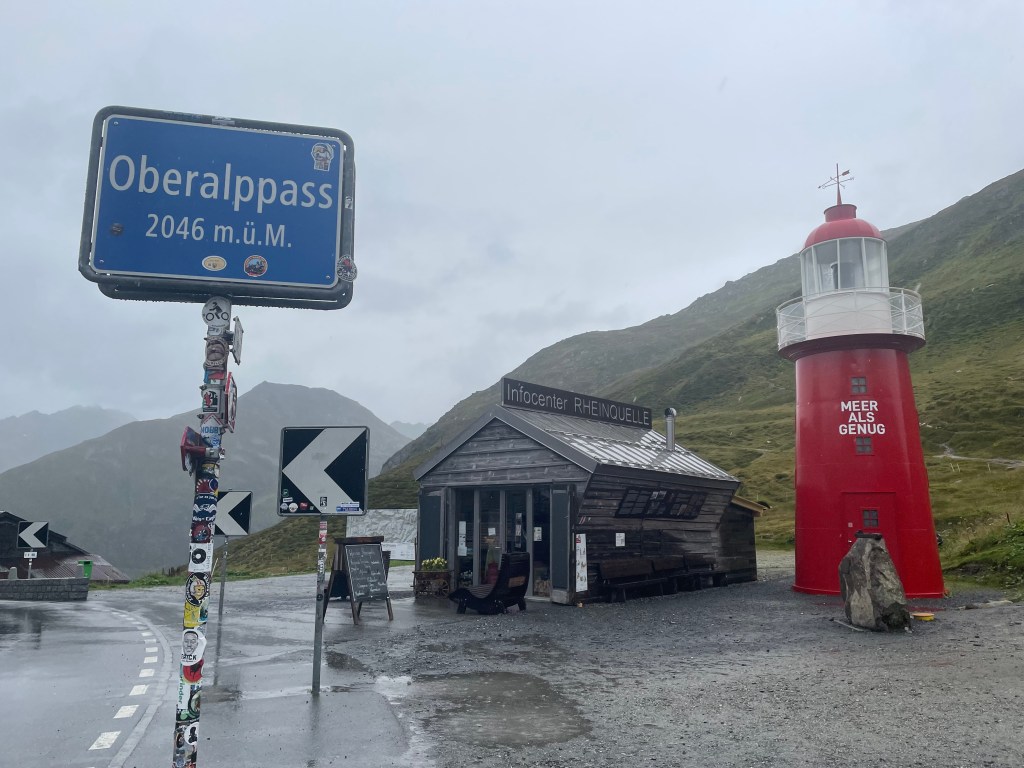
An unexpected sight in a mountainous region far from any ocean (the nearest seaport is Genoa, Italy some 200km away as the crow flies). The world’s highest lighthouse, it serves no particular guiding or safety function other than for fun.
Once over the pass, it was a steep, wet and winding descent into Andermatt.
According to Garmin
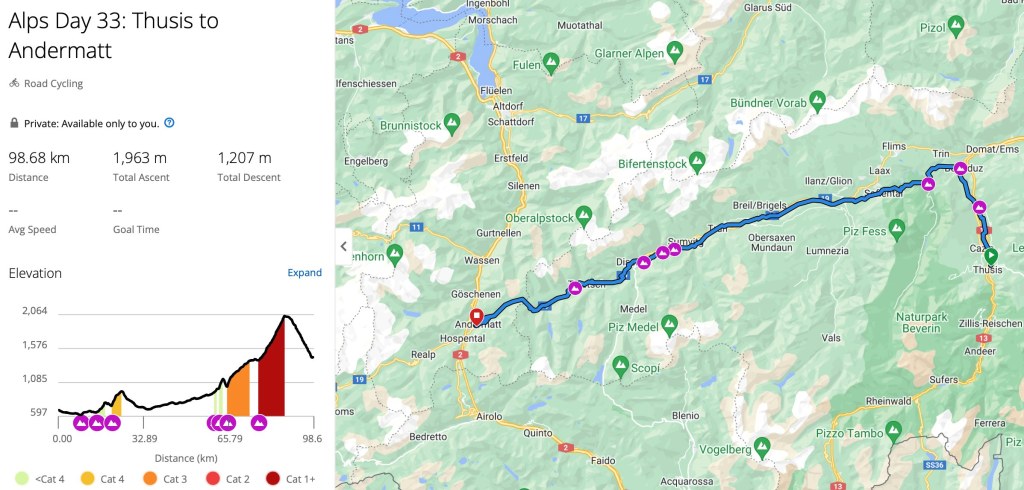


 By Bike
Leave a reply to Graham Cancel reply