Day (13th September) – Aletsch Glacier.
The rain has ceased. The clouds are lifting. Fresh snow on the peaks.
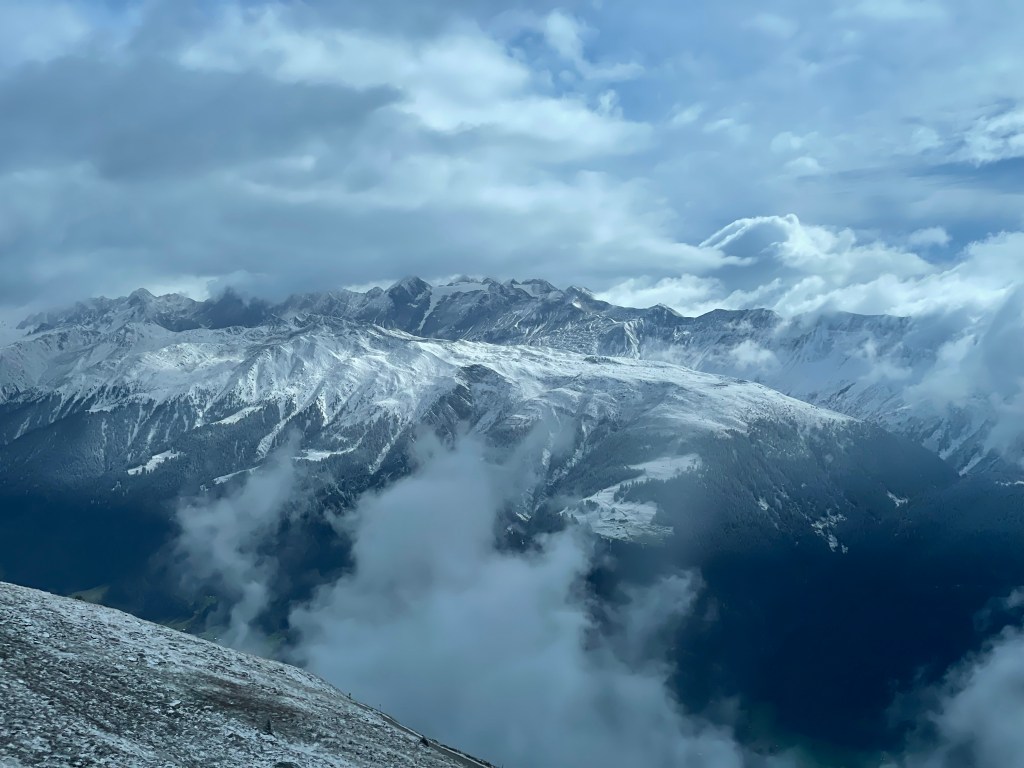
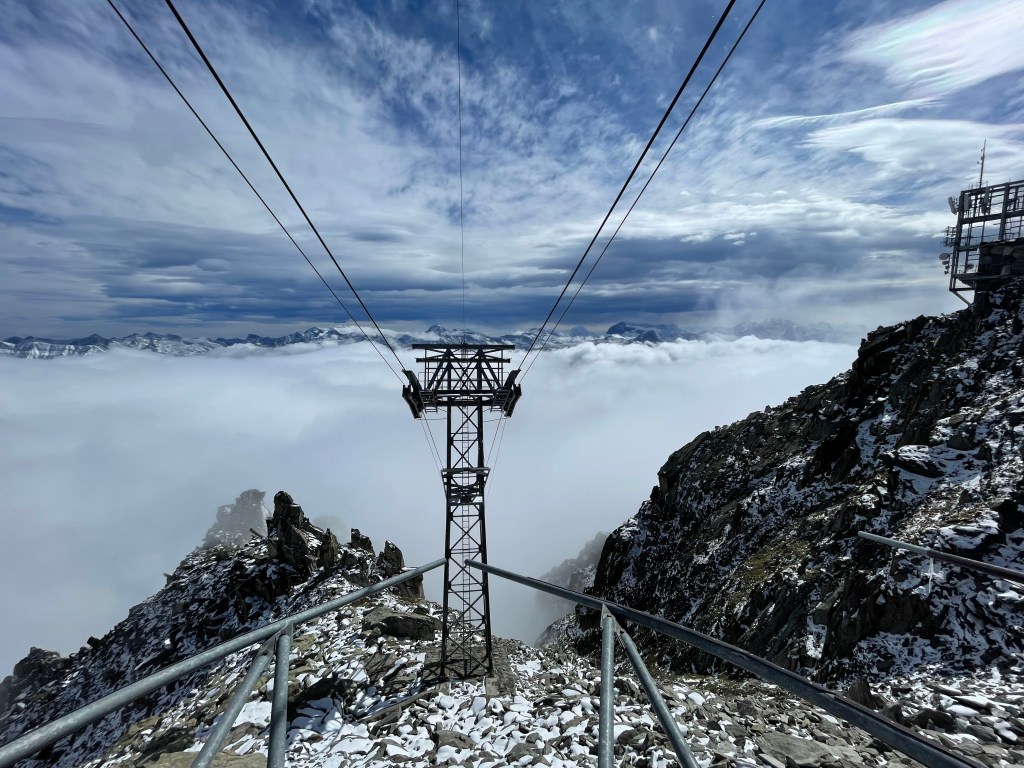
A perfect day for a cable car ride and a chance to see up close the Aletsch Glacier, the largest glacier in the Alps and the centrepiece of the Swiss Alps Jungfrau-Aletsch UNESCO World Heritage Site.
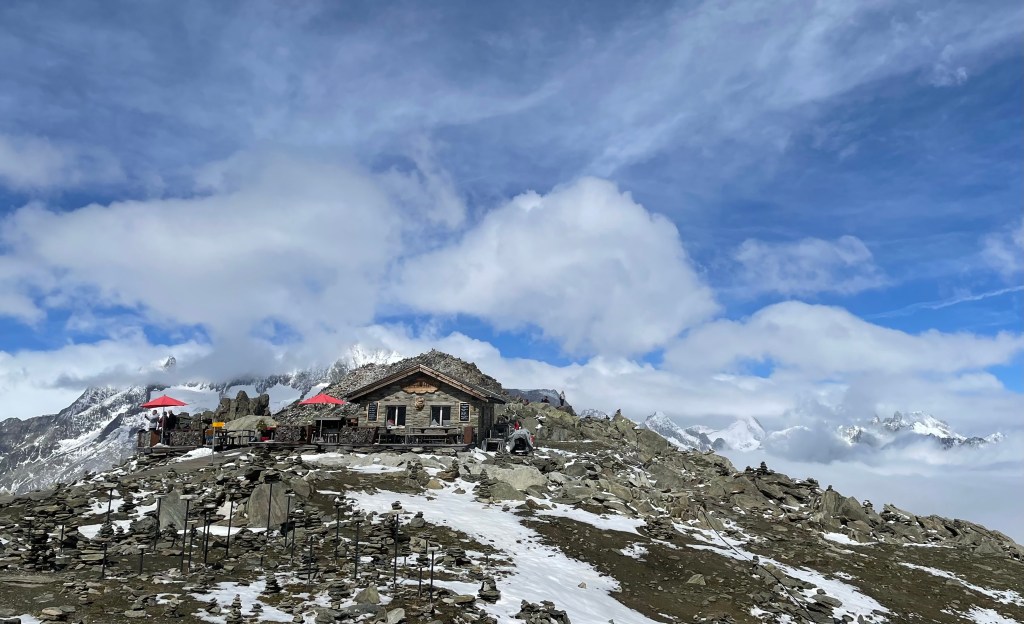
In the thin air at the top station, a parting of the clouds reveals glimpses of the massive flow of ice and the surrounding peaks where snow has accumulated and compacted over thousands of years.
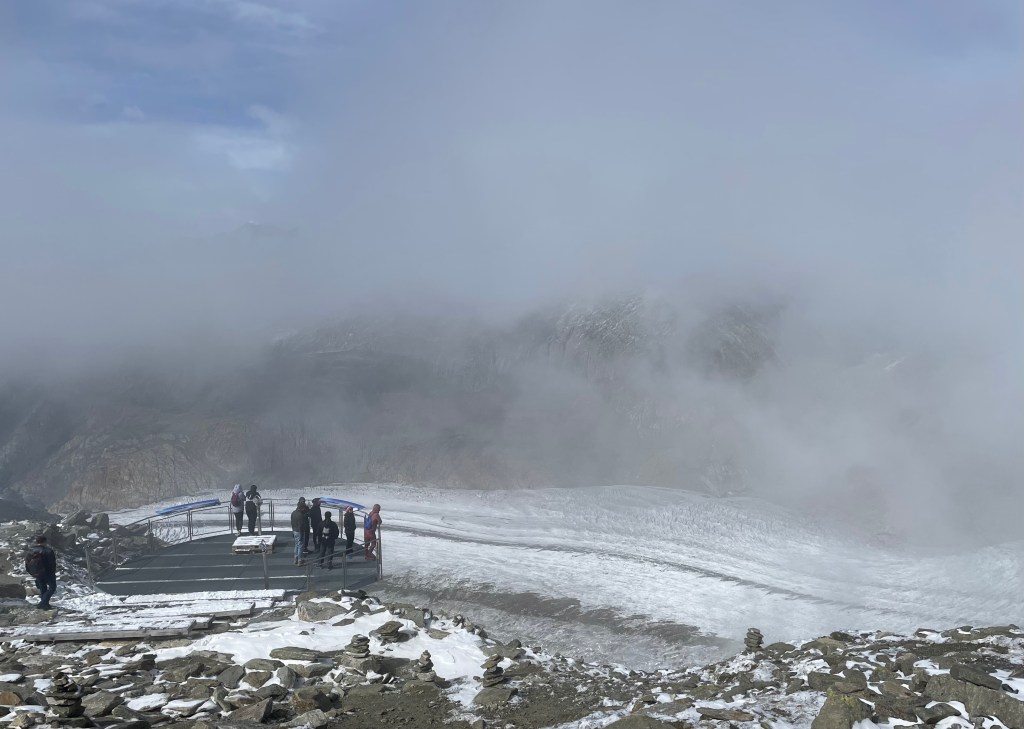
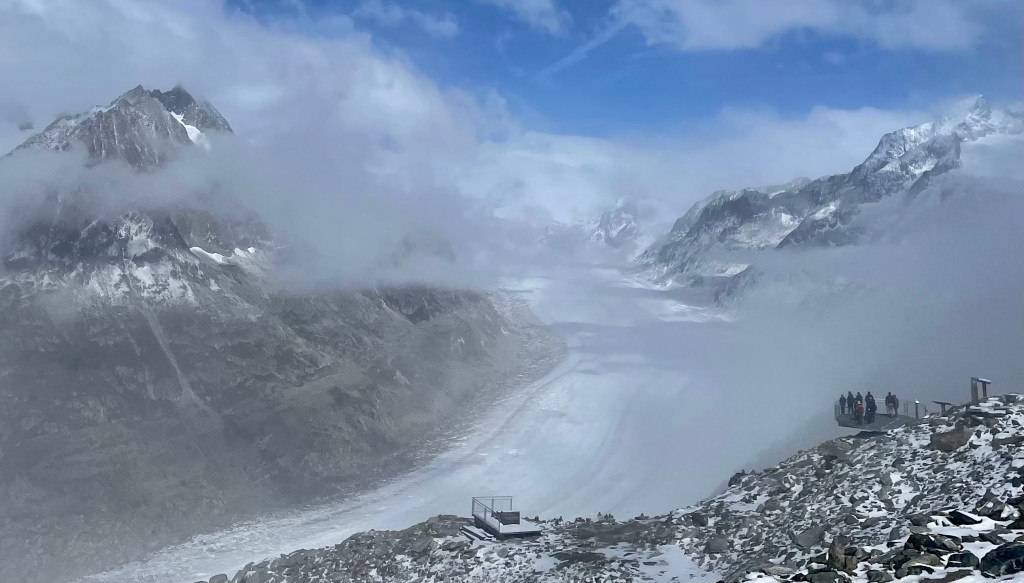
I make the short climb to Eggishorn, at 2,927m for a 360° panorama. It’s a little crowded and noisy, so I move out to the edge where for the next hour or so I sit in silence and stillness taking in the immensity of the slowly shifting landscape while clouds swirl about me. It was so beautiful, I pondered sitting there for ever…
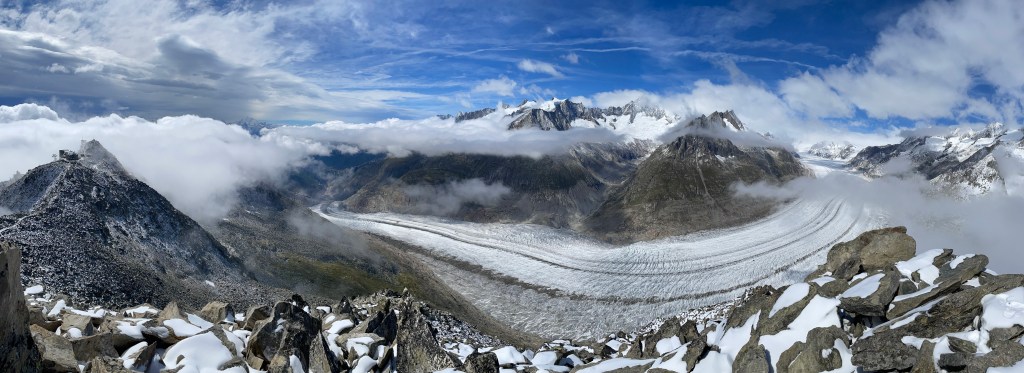
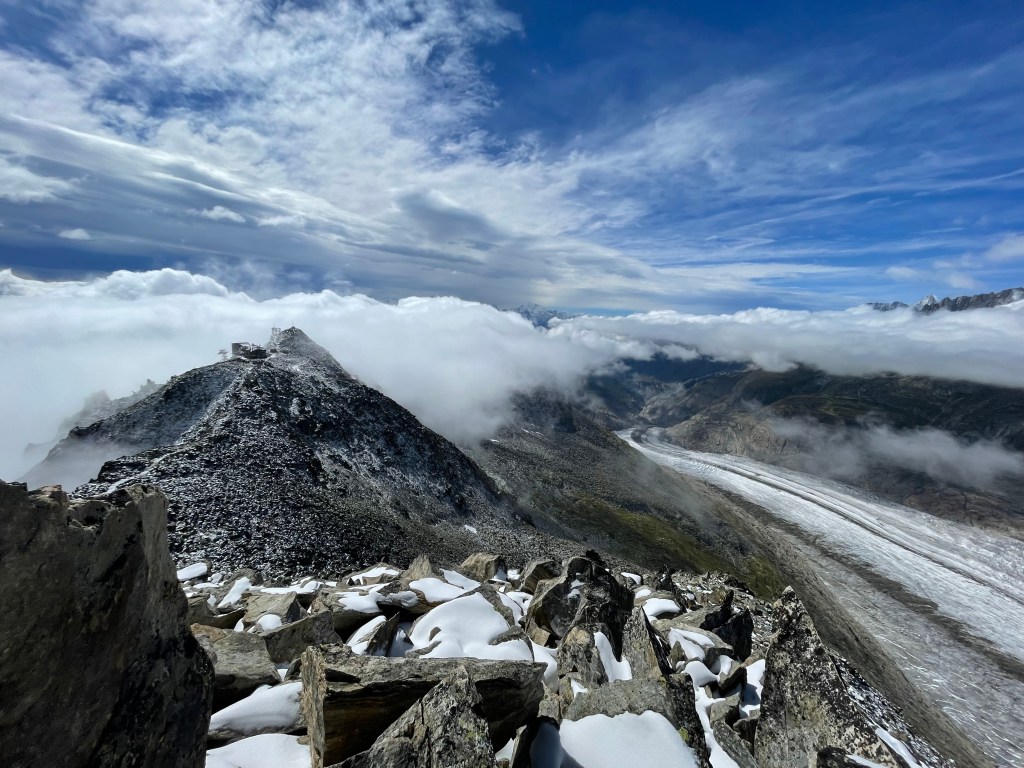
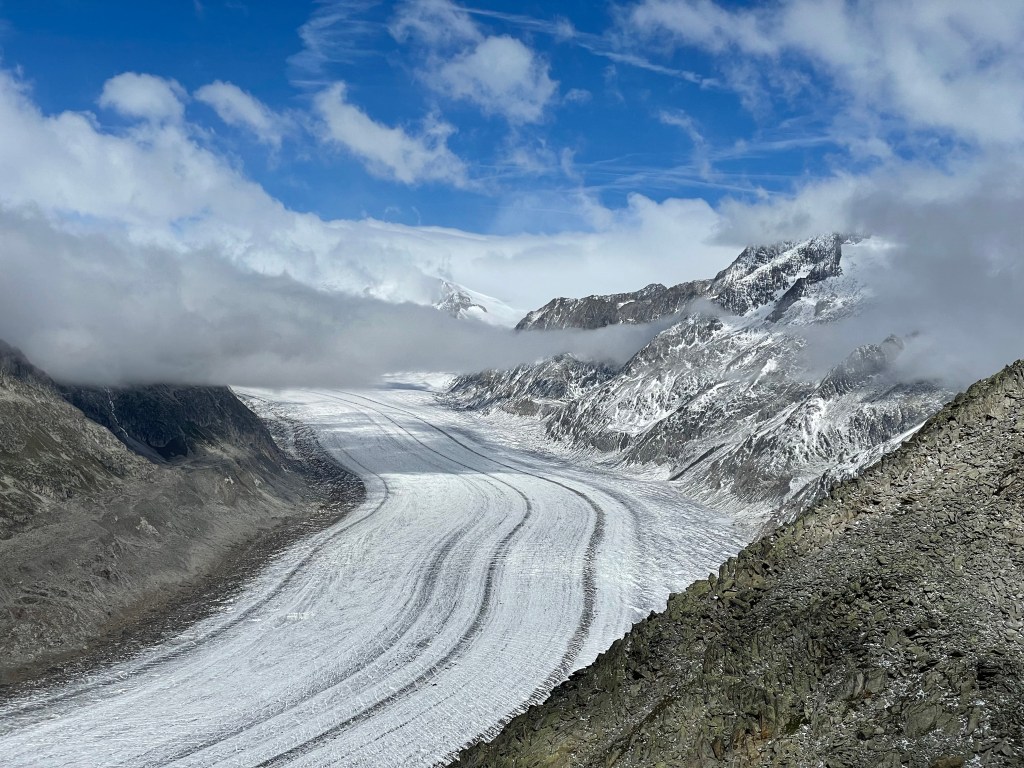
The Aletsch Glacier stretches approximately 23 km in length, covers an area of about 81.7 km² and reaches a maximum thickness of nearly 1 km. It is formed by the confluence of three powerful firn (denser than snow but not yet fully ice) streams which you can make out between the parallel dark lines of moraine that run the length of the glacier.
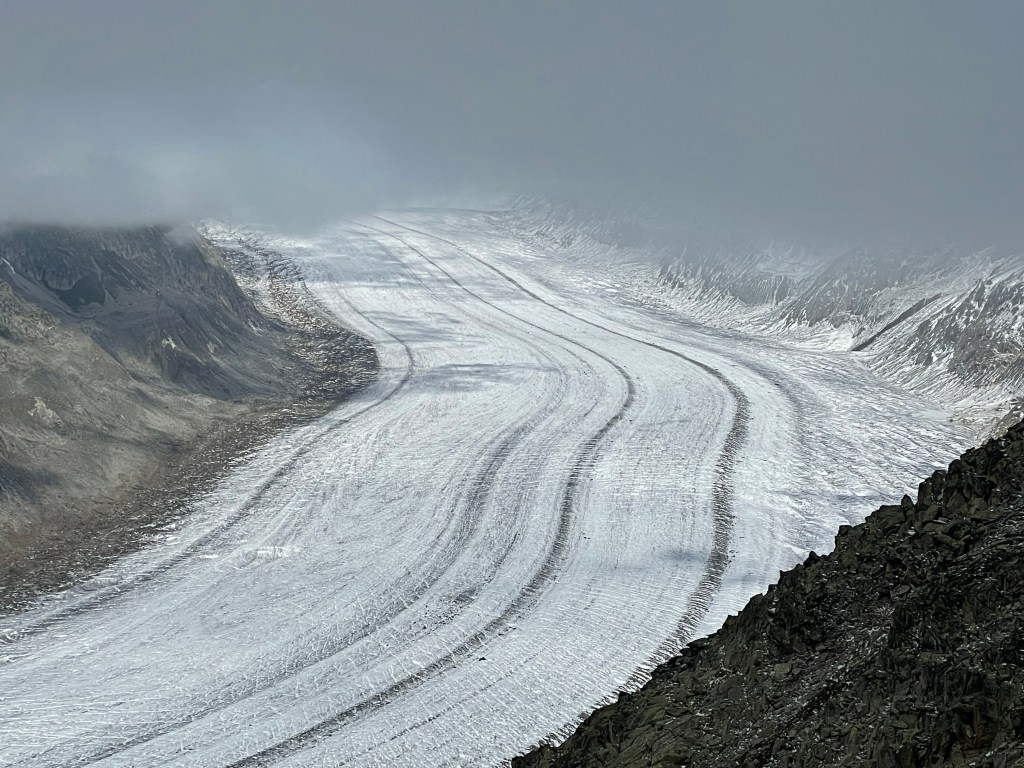

Sadly, you can clearly see how much the glacier has retreated from its high point over 150 years ago when it was 3km longer and the ice level over 300m higher than today.
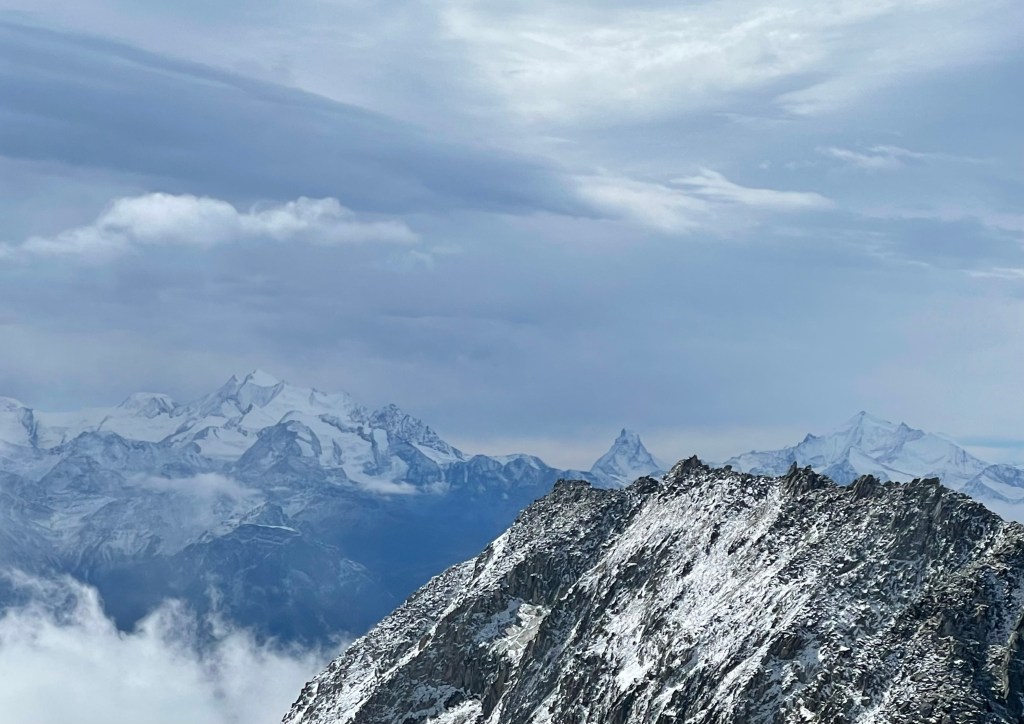
I can also see, far off in the distance, the distinctive and classic shape of the Matterhorn.
The Guardian recently reported that “Switzerland and Italy have redrawn a border that traverses the Matterhorn as melting glaciers shift the historically defined frontier.” Swiss glaciers lost 4% of their volume in 2023 and experts have stopped measuring the ice on some Swiss glaciers because there is none left.


 By Bike
Leave a comment